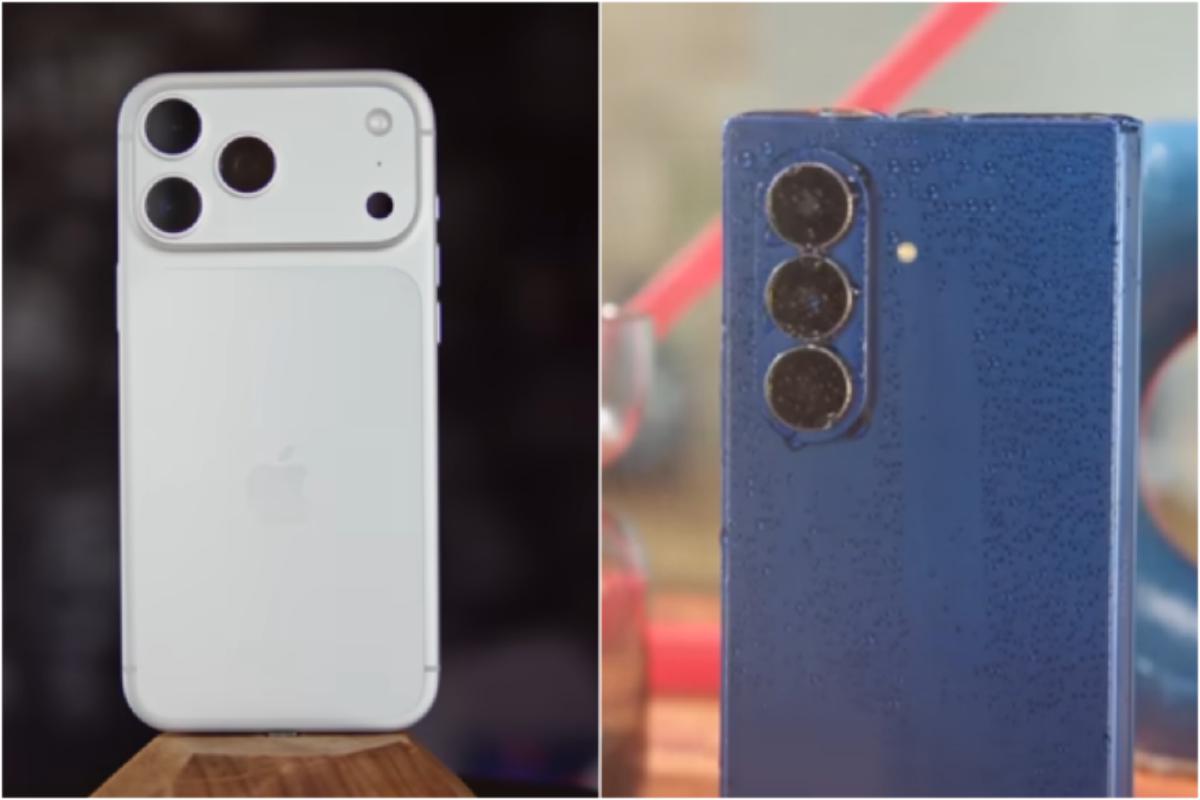
iPhone vs. Android: The 2025 Reality Check#
In 2025, the specs war is officially dead.
Every flagship phone has:
- A screen so bright it hurts your eyes at night
- A processor faster than 90% of people will ever need
- A camera that can practically see in the dark
Raw hardware is no longer the deciding factor.
The real difference between iPhone and Android today is digital philosophy — how the device fits into your life, how much control you want, and how much friction you are willing to tolerate.
This is not a benchmark comparison.
This is about how these phones behave in the real world, far away from marketing slides and lab tests.
The Digital Philosophy: Which One Actually Fits Your Life?#
Choosing a phone in 2025 is no longer about RAM, megapixels, or clock speeds.
It’s a choice between:
- A curated, tightly controlled experience that “just works” — until you step outside the ecosystem
- A modular, open-ended tool that adapts to you — sometimes demanding more attention in return
Both approaches are valid. They just serve very different people.
1. The Friction of the “Invisible Thread”#
The biggest difference doesn’t happen on the screen.
It happens the moment you put the phone down and switch devices.
iPhone: The Seamless Cage#
Apple’s ecosystem in 2025 feels less like a “walled garden” and more like an invisible thread pulling everything together.
If you own a Mac, an iPad, and an Apple Watch, the iPhone becomes the central nervous system of a single, distributed computer.
Where it shines:
- Universal Clipboard: Copy text or images on your iPhone, paste instantly on your Mac — reliably.
- Handoff: Start a FaceTime call or email on one device and finish it on another without interruption.
- Apple Intelligence: Siri now understands personal context — finding documents, messages, and files across apps to complete real tasks instead of just setting timers.
The reality check:
This convenience is addictive — and expensive to escape.
The moment you switch to a non-Apple phone:
- Your Apple Watch becomes useless
- iMessage group chats break
- AirDrop disappears
- iCloud workflows fall apart
You’re not just buying a phone.
You’re buying into a lifestyle subscription.
Android: The Freedom of the “Open City”#
Android’s philosophy is the opposite.
It’s designed as an open city, not a gated community.
You can comfortably mix:
- A Samsung or Pixel phone
- Windows or Linux laptop
- Sony or Bose headphones
- Any cloud service you prefer
Why it matters:
- Real File Management: Android handles files like a real computer — ZIP extraction, folder renaming, direct uploads.
- Interoperability: Standards like Bluetooth, Nearby Share, and cloud sync work across brands.
- Behavior Customization: Tools like Tasker let you automate actions — location-based rules, battery triggers, workflow shortcuts.
Android doesn’t just let you change how your phone looks.
It lets you change how it behaves.
2. Photography: The “Vibe” vs. The “Truth”#
By 2025, every phone takes “good” photos.
The difference is intent.
iPhone: The Social Media Standard#
The iPhone remains the king of effortless visual polish.
- Color Science: Skin tones are warm, consistent, and flattering.
- Video Superiority: iPhones still dominate mobile video — especially stabilization, lens switching, and audio.
- App Optimization: Social media apps are optimized directly for iOS camera APIs, resulting in higher-quality in-app photos and videos.
If your phone is primarily a content creation tool for social platforms, the iPhone is still the safest choice.
Android: The Tool for the Photographer#
Android phones shine when photography becomes intentional, not automatic.
- Sensor Advantage: Flagships like the Galaxy S25 Ultra or Xiaomi’s premium models use much larger sensors.
- Zoom Reality: 20x–30x zoom shots are genuinely usable on Android — not watercolor paintings.
- Pixel’s Computational Edge: Google’s Pixel phones excel in difficult lighting, capturing more natural dynamic range without heavy color bias.
Android phones feel less like a filter and more like a camera you control.
3. Daily Interaction: Flow vs. Fatigue#
This is where long-term satisfaction is decided.
The Back Gesture Problem#
Android’s universal Back gesture is small but transformative.
- Works the same in every app
- Reachable with one hand
- Predictable and fast
On iPhone:
- Some apps swipe back
- Some use top-left buttons
- Some use an “X” in the corner
Over time, this inconsistency creates subtle fatigue — especially for power users.
Notifications: Order vs. Chaos#
Android treats notifications like a task manager:
- Smart grouping
- Inline replies
- Snoozing
- Priority control
Apple’s notification system still feels like a junk drawer — functional, but cluttered.
If you handle high message volume daily, Android is simply more efficient.
4. The Longevity Myth#
Resale Value & Ownership Cost#
iPhones retain value exceptionally well.
- An iPhone Pro model often keeps ~50% value after two years
- Most Android flagships lose value much faster
If you upgrade frequently, iPhone ownership can actually be cheaper long-term.
Software Support & Aging#
- Apple supports iPhones for 6–7 years consistently
- Google and Samsung now promise 7 years of updates
However, older iPhones tend to remain smoother over time, while aging Android devices may develop stutter as storage fills and background services accumulate.
5. So… Which One Is Actually Better?#
It comes down to your tolerance for tinkering.
Choose an iPhone if:#
- You want technology to disappear into the background
- You value seamless device integration
- You prioritize video quality and resale value
- You don’t want to manage your phone — just use it
Choose Android if:#
- You see your phone as a tool, not an appliance
- You want full control over files and defaults
- You value superior zoom, customization, and navigation
- You prefer flexibility over polish
Final Verdict#
In 2025:
- The iPhone is the world’s best app-consumption machine
- Android is the world’s most capable mobile computing platform
If you want to live inside curated ecosystems, choose an iPhone.
If you want to interact with your data and the world on your own terms, choose Android.
There is no universal winner — only the device that matches how you think.
Written by Tech Realist, a long-time mobile platform analyst and daily user of both iOS and Android devices.
Frequently Asked Questions (FAQ)#
Is iPhone better than Android in 2025?#
Neither platform is objectively better for everyone. In 2025, the iPhone excels at ecosystem integration, long-term performance stability, resale value, and mobile video recording. Android, on the other hand, offers greater flexibility, deeper customization, superior zoom photography, and better file management. The better choice depends on how much control you want over your device.
Which phone lasts longer: iPhone or Android?#
Both platforms now offer long software support. Apple typically supports iPhones for 6–7 years, while Google and Samsung promise up to 7 years of updates on recent flagships. In practice, iPhones tend to feel smooth for longer, while some Android phones may show performance slowdowns over time depending on storage usage and background services.
Is Android still more customizable than iPhone?#
Yes. While iOS has improved customization, Android remains significantly more flexible. Android allows deeper control over default apps, system behavior, automation, file access, and interface logic. iPhone customization is mostly visual, whereas Android customization affects how the phone actually works.
Why do iPhones have better resale value?#
iPhones retain value because of consistent software support, strong brand demand, and a stable second-hand market. Older iPhones remain desirable for longer, while Android phones—despite strong hardware—tend to lose value faster due to rapid model turnover and brand fragmentation.
Which is better for social media: iPhone or Android?#
The iPhone is generally better for social media, especially video. Apps like Instagram, TikTok, and Snapchat are better optimized for iOS, resulting in higher-quality in-app photos and videos. Android phones can take excellent photos, but social apps often compress or reduce quality when used directly inside the app.
Are Android cameras better than iPhone cameras?#
It depends on what you value. Android phones often have superior hardware, larger sensors, and much better zoom capabilities. iPhones focus on consistency, color accuracy, and video performance. For photographers who want control and flexibility, Android is often better. For effortless, reliable results—especially in video—the iPhone still leads.
Is switching from iPhone to Android difficult?#
It can be, especially if you are deeply invested in Apple’s ecosystem. Services like iMessage, AirDrop, Apple Watch, and iCloud workflows do not transfer seamlessly to Android. While Google offers tools to move data, the biggest challenge is replacing Apple-exclusive features you may rely on daily.
Is Android more secure than iPhone?#
Both platforms are secure when used properly. Apple emphasizes strict app control and privacy limitations, while Android focuses on transparency, permissions, and user control. Security risks usually come from user behavior rather than the operating system itself. Keeping your phone updated matters more than which platform you choose.
Which phone is better for productivity?#
Android generally offers better productivity for power users due to superior multitasking, file handling, automation tools, and flexible workflows. iPhones are excellent for focused, app-based productivity, especially when used alongside a Mac or iPad within Apple’s ecosystem.
Should I choose iPhone or Android in 2025?#
Choose an iPhone if you value simplicity, seamless device integration, strong resale value, and top-tier video quality. Choose Android if you want control, flexibility, advanced camera hardware, better notifications, and a phone that behaves more like a personal computer. The best choice is the one that fits how you use technology.